Showing posts with label Spain. Show all posts

Thursday, May 16, 2013

What is Magical Realism?

When I tell people I came to Spain to study literature (among other reasons, but that's the academic reason), they look at me funny, as though my freckles have turned purple.  Not many English majors venture to Spain; most American students go to the U.K. to study literature, which makes a lot of sense.  But the U.K. is a little chilly for my tastes, so here I am.  Plus, I really like Spanish and Latin American literature, probably even more than I like Brit Lit.
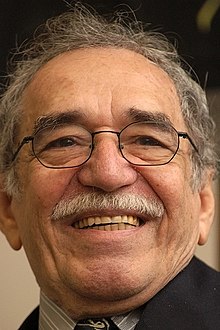
Márquez, considered the master of
magical realism.
For decades, Latin American literature has been linked with magical realism, though technically, the genre hails from France.  But as my professor told us, "Americans do it better."

Gabriel García Márquez.  'Nuff said.

But what is magical realism?  For some reason, it's a genre that we have a lot of trouble defining.  Often I'll look at a book that's described as magical realism, but really it's urban fantasy (or even just fantasy). Recently my professor gave us a good definition, which I figured I'd share:

Magical realism is exactly what the name suggests:  magical events happen in the normal world, but what separates it from genres like urban fantasy is that the events are told as though they're completely ordinary.  There is no sense of awe.  No wonder.  The characters show little to no reaction, and if they do, it's something like, "Hmm, that's interesting," and then they continue on with their lives.  They don't dwell on it, and neither does the narrator.  Magic is almost an aside:  "By the way, he was levitating.  No biggie."

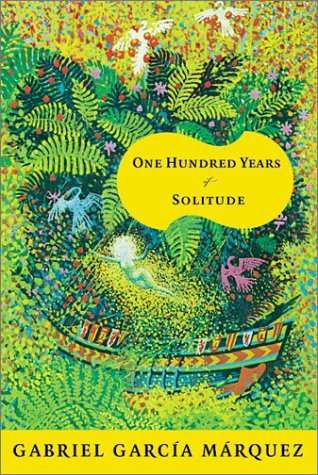
In One Hundred Years of Solitude, for example, a character starts to levitate.  Why?  Because he drank hot chocolate.  It's passed off as totally normal.  Nothing special.  Happens all the time.
So say a character discovers that her next door neighbor is a witch.  If she freaks out (because who ever heard of witches actually existing?) then most likely that's urban fantasy.  If it's mentioned in passing, such as, "As Natasha walked to school, she waved to her next door neighbor, Mrs. Andrews, who happened to be a witch," then most likely it's magical realism.

Set-Up & Pay-Off: The Shroud of Turin

Note:  So it was pointed out to me that this blog post is being discussed over here.  On that note, I'd just like to say that my intention is not to provide scientific information or discredit the Shroud in any way.  I'm certainly not qualified for that and I don't pretend to be.  Rather, the point of this post is to use the exhibit, which indeed has a room in which it claims the Shroud is resistant to temperature, water, etc., as an example of problematical set-up/pay-off.


The exhibit itself is hardly a scientific journal article.  There are no signs with information, no pamphlets…Nothing except an audio guide with a very clear goal:  to tell a story.  It's not the story itself I wish to focus on; it's the telling of the story, which left me and others very disappointed.

A few weeks ago my roommate told me that the Shroud of Turin was currently in Sevilla, which is a big deal, since it usually lives in Italy.  My response:  "What's in the world is the Shroud of Turin?"

"It's supposedly the shroud in which Jesus was wrapped when they took him off the cross," she explained.  "It has his image on it."

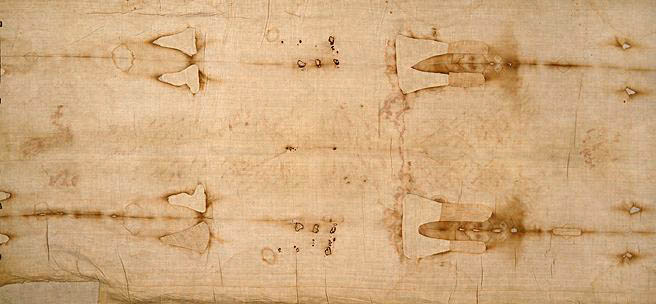
A negative photograph of the Shroud of Turin.
Interesting, indeed.  As a sometimes-wannabe-pseudo archaeologist, I like old stuff, and if this really was the shroud in which Jesus was wrapped, then that's pretty old.  Besides, I like to make checkmarks on my "List of Cool Things I've Seen in Museums" (which so far includes St. Peter's bones and Abraham Lincoln's hat, among others), so I decided to make a visit to the exhibit titled La Sábana Santa, which translates to "The Holy Shroud."

I wasn't really expecting much--just a piece of cloth--but it turned out to be a pretty neat exhibit, one that told a story.  It began with the discovery of the shroud in Medieval France, then proceeded to discuss the nineteenth-century photograph that revealed it to be a giant negative of a man who looks suspiciously like Jesus Christ.

Could it really be Jesus?  And the even bigger question, how is the image on the cloth when there's no signs of paint, ink, embroidery, or anything else of an artistic nature?  (Plus, the question that resounded in my wannabe archaeologist's mind:  How could a piece fabric survive 2000 years?  Fabric is one of the most degradable materials, which is why archaeologists rarely ever find it, and when they do, they only find tiny threads.)

These are the questions the exhibit tried to answer.  Slowly.  Each room offered a little bit more information, more clues:
  • Carbon dating -- Do the dates match Crucifixion?
  • Pollen samples -- Scientists are able to analyze pollen in the threads, which indicates where the fabric has been.  Indeed, the shroud had bits of pollen from plants that only grow in and around Jerusalem.
  • Forensic studies -- What do the blood stains and the positioning of the limbs indicate?

Each room added a little bit more; the entire time, the suspense built and built.  Soon enough, I was ready to scream into my audio guide, "Just tell me if it's real!"

Then, the rising action right before the climax:  the tests.

  • The shroud is impervious to water.
  • The shroud is impervious to temperatures, both hot and cold.
  • The shroud is impervious to light.  The image hasn't faded.
After thousands of years, the shroud has not deteriorated at all, something absolutely unheard of in the archaeological world.  Which makes one wonder if it really is a miracle…

By this point I'm bouncing on the balls of my feet with anticipation, wishing the audio guide would go faster (there were no cards next to the displays, so unfortunately I couldn't just read my way through).  I needed to know.  Then, finally, it told me to proceed into the next room.

The climax.  Now, after about an hour, it was finally time to actually see the shroud of Turin and find out what scientists have concluded:  is it really the shroud?

There it is.  Hanging on a wall behind glass.  I walk toward it, holding my breath, and--

"What you're seeing is a reproduction of the shroud of Turin.  The original is only taken out every twenty five years so that it doesn't deteriorate."

Wait…What?  Rewind, I need to hear that again.  Reproduction?  So that it doesn't deteriorate?

This is what I saw behind class.  Yup…It really is just a strip of fabric.
Sorry, but the exhibit was just asking for the string of blasphemies that escaped my mouth.

Nobody said anything about a reproduction.  A reproduction?  Of a strip of fabric?

That's hardly the worst of it.  The whole time the museum strung me along:  despite my doubts in the beginning, as I went along, I became pretty convinced.  The science seemed thorough, the evidence pretty solid…

Then the penultimate room.  The one with the tests:  impervious to water, impervious to temperature, impervious to light, impervious to time…

Then the last room:  "The original is only taken out every twenty five years so that it doesn't deteriorate."

Wait, but you just said…?  I thought…?  What happened to being impervious to everything?  Even time?

One sentence, and the museum lost me.  Nope.  
If this were a book, I'd have thrown it across the room.  Yup, this exhibit is a great example of what books shouldn't do.

When you pick up a book, you're putting your faith in the author.  You're trusting him with valuable hours of your life:  his book had better satisfy.

I'm not saying it should be predictable.  It should, however, have good set-up and pay-off:  they should match each other.

What do I mean by set-up?  Pay-off?

Set-up is information you need in order for the pay-off, another action, to be believable.  For example:

Joanne has to stop a bomb from detonating.  Fortunately, she has the instruction manual.  Unfortunately, it's written in Greek.

The set-up would be that Joanne knows Greek:  earlier in the book, we witnessed a scene in which she speaks Greek to her neighbor, who happens to be from Athens.  The pay-off would be that she can easily read the instruction manual and stop the bomb.  That's a good set-up/pay-off situation.  A bad one would be:  By the way, Joanne knows Greek.  We learn that she can speak it at the same time she needs it.  That's not very believable.

The Shroud of Turin exhibit had excellent set-up.  With every room, it gave just a tad bit more information, continuing to pique my interest as it tugged me along.  A little here, a little there, so that by the end, I wouldn't have been able to "put the book down."  I couldn't wait for the big reveal.

So set-up, great.  Pay-off, not so much.

Just like you can't have a good pay-off without a good set-up, if the pay-off isn't good, then the set-up is meaningless.  It's excess information, completely unimportant.  Which is how I felt after the exhibit: that the set-up was a waste of my time.

Moral of the story:  set-up/pay-off problems can go both ways.

Have you ever been really disappointed in something because of set-up/pay-off problems?  Movie, book, museum?

Tuesday, May 7, 2013

Virtual Tour: Barrio Santa Cruz


Since I just moved to a magical land known as Barrio Santa Cruz, I decided to do a blog post that documents my ever-exciting walk to the metro every morning.  It's like a virtual tour!

I wake up, often to flamenco singing or accordion music wafting up from the street.  As I open the shudders, I'm greeted with this view:  a stereotypical Spanish street.  Narrow, winding, with houses painted in shades of red, white, and gold.


I leave my house, which is the pink one to the left.  As you can see, it's across from a bar and a variety of shops.


This shop is my favorite.  I pass it every day, often several times a day.  Even though the shop's fragrance covers the whole street, each time I walk by I have to stop and smell the loose-leaf teas and spices, especially the piña colada tea.


I continue toward the metro, making my way through streets like this one.


Soon I emerge from the neighborhood (Santa Cruz) through this entrance.  Yes, it's bordered by the outer walls of the Álcazar, which is indeed a giant castle.

This is the main entrance into the Álcazar.  Every day, I have to make sure not to get run over by these black and yellow carriages, which are all over the city, but especially prevalent in this area.


As I leave the neighborhood, the Álcazar is to my left.  To my right?  The Cathedral, which is the third largest in the world.


I continue forward, leaving the castle behind me and passing by the Archivo de Indias, or the Archive of the Indies (that's the big square building on the left).  This is where records and all official business regarding the Americas were kept.  It currently houses an impressive collection of pictures/statues of Hernán Cortés


I arrive on Avenida de la Constitución.  To the left is a corner of the Cathedral (it's REALLY big) and to the right the Archivo de Indias.


 I walk down Avenida de la Constitución, which is always bustling with tourists, street performers, and locals just trying to get to Plaza Nueva or Calle Tetuan.


Finally I arrive in Puerta de Jerez, where I can hop on the metro, grab a coffee, or go relax by the river.


Monday, May 6, 2013

Why I Lost

So I lost the A - Z Challenge.  What's worse, I lost it with two letters left:  Y and Z, which were going to be "Youth Culture" and "Zzzzs:  An Ode to the Siesta."  Alas, I failed--but for good reason!

A week ago, my roommate and I moved from an apartment near Nervion (a modern but ugly district best known for its shopping mall) to a house in Barrio Santa Cruz, which is, well…magical.

How to describe it?  The house is four stories, but it's small:  the bottom floor is nothing but the front door, and after that, each story only has two rooms:  2) tiny kitchen and living room/dining room, 3) bathroom and our bedroom, 4) bathroom and other housemate's bedroom.

But the location?  Goodness gracious, where to begin?

Santa Cruz is the oldest neighborhood in the city, so as you might expect, it looks like a medieval Spanish neighborhood:  white walls trimmed with gold, narrow winding streets, fountains and small plazas bordered by the outer walls of a castle.

What's that?  A castle?


The entrance to the castle I now pass every single day :)
Oh, yes.  Santa Cruz neighbors the Cathedral an the Álcazar, the gigantic castle known for its Moorish architecture and extensive gardens.  Every day on my way to the metro, I pass by this beautiful castle.  So casual, right?  (Nope.  Every time I walk by, I freak out a little bit).

What's more?  There's a musician who has taken to playing his accordion below our window.  Then there's the flamenco singer who likes to stroll around the block.  Down the street, there's an old-fashioned spice and tea shop, which makes the whole neighborhood smell like, well…spices and teas.  Honestly, I feel like I'm living in Epcot.

Anyway, moving is a difficult, time-consuming process, which is why I failed.  But that's all right:  it was completely worth it.  Lots more space, a fantastic location, and a third housemate who happens to be one of our good friends.

No WiFi though (at least, not yet).  Surprisingly, I don't mind all that much.  It adds to the medieval feel of the neighborhood.

More pictures to follow!

Sunday, April 28, 2013

A - Z Challenge: XAVIER --> JAVIER

Again, I'm a day late.  Oh well.

SPAIN

Yay, today I'm going to talk about Spanish names, which are tons of fun.  I think Spanish names are some of the most beautiful names ever, so I'm going to share the ones I've encountered, my favorites, and what their English equivalent would be (if they have one).  Here it's also common to find more names that we might consider "old-fashioned," like Óscar (Oscar), Alfredo (Alfred), and Beatriz (Beatrice).  I really like that.

Boys

Javier (Xavier) --> A very common name, often shortened to "Javi," and well known in the English-speaking world due to Javier Bardem.
Antonio (Anthony)
Carlos (Charles)
Álvaro
Francisco (Frances)
Rafael (Raphael)
Raúl (Ralph)
Ricardo (Richard)
Juan (John) --> The king of Spain's name is Juan Carlos.
Reyes --> Literally means "kings" in Spanish.
Sergio (Sergius)
Ángel (Angel)
Santiago (James) --> Santiago (Saint James) is the patron saint of Spain.
Enrique (Henry)

Girls

Beatriz (Beatrice) --> This is my favorite girls' name, pronounced "Bay-uh-treez," and often shortened to "Bea."
Isabel (Elizabeth/Isabella) --> Very common.
Florencia (Florence) --> Often shortened to Flor (the Spanish word for "flower")
Soledad (Solitude) --> Despite this name's sad meaning, it's actually fairly common.
Aurelia --> Less common, and it means "gold."
Mercedes (Mercy) --> Yes, pronounced like the car, only a little softer.
Amparo --> Means "protection, shelter."
Alba --> This word means "morning light" in Spanish.
Pilar (Pillar) --> In English, we probably wouldn't name someone "Pillar," as in "column," but it's actually a pretty common name in Spanish.  Personally, I really like it.
Maria + José/Luisa/Laura/etc. --> Maria is a very common name, but it's often paired with another.
Rocio --> Literally translates to "dew" in Spanish.

WRITING

Names are fun, but they're also stressful.  How do you choose the perfect name for a character?  Sometimes, it just comes to you.  Sometimes, you have to search, and search, and search…

One of my biggest pet peeves is unusual names that have no reason to be unusual.  I understand want their characters to stand out, but at the same time, bizarre names often detract from believability, especially in a contemporary setting.  In fantasy and science fiction, unusual names are fine, as long as they fit with the rest of the world (if you're creating your own world, even made-up names should be derived from a common language so they have a similar sound, which helps with world-building).  Otherwise, tread carefully.

Be especially careful with historical fiction.  It's not enough for the name to come from the language of the country in which the story is set.  There was less variety back in the day (just look at Jane Austen's books, for example), and names that didn't follow the norm were very, very rare.  Some names didn't even exist yet.

How do you choose names?

Friday, April 26, 2013

A - Z Challenge: VESTIDOS (CLOTHES)

I'm a day late.  Oops!

SPAIN

Like many countries, Spain has its traditional national dress.  For women, it's the traje de faraleas (a flamenco dress) and for men it's the traje corto (short jacket).  Of course, these aren't part of everyday attire.  They're worn on special occasions (like the Feria de Abril in Sevilla), and that's about it.

Me (left) and my roommate (right) in flamenco garb at the Feria de Abril in Sevilla.  These dresses are from the 80s, so yes, they're a little out of fashion.  But they still have the traditional ruffles!  (Polka dots are very in)

The men are in the traje corto, at the Feria de Abril.
 Before coming to Spain (and Europe, in general), I received a lot of fashion advice to help blend in, so as to be less targeted by pickpockets.  Wear lots of skirts.  Don't wear sneakers.  Avoid clothing with brand names like North Face, Abercrombie, American Eagle, etc.  Not only are harem pants acceptable, but they're relatively common.  Sweats are for the house only.  If planning to travel to any Muslim countries (such as Morocco and Turkey), make sure you have more conservative clothing and a scarf to cover your hair, so that if you'd like to visit a mosque, you don't have to borrow a head covering.
My friend, Natalie, (left) and me (right) in front of the Blue Mosque in Istanbul.  We had to cover our hair and take off our shoes before going inside.

For more on fashion (specifically, fashion in writing), click here!

Thursday, April 25, 2013

A - Z Challenge: UNSEEN, UNHEARD, UNKNOWN

SPAIN

Like most touristy places, the big cities in Spain do a good job of showing tourists what they come to see:  sunshine, siestas, palm trees, flamenco dancing, outdoor cafes that serve sangria all day, etc.  This is our perception of Spain, but like all places, so much remains hidden--unheard, unknown, unseen.  

I'm fortunate enough to live in the Centro, where you'll find all the touristy places, but I teach an English class in a marginal neighborhood called Polígono Sur, which is the poorest area of Sevilla.  Here you won't find any outdoor cafes or souvenir shops selling keychains and postcards.  You won't see very many people on the streets, except for maybe a few kids playing soccer.


Then of course there's the economic crisis.  It's possible that, as a tourist, you might run into a protest, but it's hard to get a sense of why people are protesting unless you're in a place for a long period of time.  That's why it's always a good idea to do some research into a country before you go.  More than a guidebook, I mean.  Catch up on current events, because if we don't, we'll just fuel that stereotype we all hate so much:  the stereotype of the "ignorant American who thinks the universe revolves around the U.S.A."  When we travel, we are representatives of our country, whether we like it or not, which is why it's important to leave a good impression by being knowledgeable and showing respect.

Tuesday, April 23, 2013

A - Z Challenge: TRAVEL

SPAIN

Hands-down my favorite thing about living in Spain is the ease of travel.  In the past three months, I've been to Italy, Morocco, Switzerland, Turkey, and Ireland, and before I return to the States in June (so soon!), I'll have added the United Kingdom, France, and Greece to the list.

I am one ridiculously lucky girl.

As part of Southwestern Europe, Spain is in a fantastic location.  The countries of Northern Europe--France, Germany, the UK, etc.--are only a short plane ride away, as are Mediterranean countries like Greece and Italy.  Hop on a ferry for half an hour, and guess what?  You're in Africa.  Or if you feel like staying even closer to home, you can take a bus to Portugal.

It.  Is.  Awesome.


A street in Chefchaouen, Morocco.

Sunset in Istanbul, Turkey.

Roman Forum in Rome, Italy.

Blarney Castle in Blarney, Ireland.


Monday, April 22, 2013

A - Z Challenge: SEVILLA

SPAIN

I'm feeling lazy, so today I'm just going to post photos of my beautiful home (Sevilla) away from my home (Williamsburg) away from home (Philadelphia).

The Guadalquiver River.

The entrance to the Alcazar.

This is me in front of the gate leading to the Feria de Abril fairgrounds.  (Feria is a week-long celebration that involves flamenco dancing, carnival rides, horses, food and drink).

Part of the gardens of the Alcazar.

The Plaza de España, as seen in Star Wars Episode II.

The Cathedral, which is the third largest in the world!

Las Setas (The Mushrooms), a popular hang-out spot in Sevilla.  Good for tapas.

ORANGE TREES EVERYWHERE.

Saturday, April 20, 2013

A - Z Challenge: REYES CATÓLICOS (THE CATHOLIC MONARCHS)

SPAIN

From my experiences, Spanish history is not something that's taught in most American schools.  If you were to ask me about it five years ago, I'd have replied,

"Columbus discovered America, then Cortés killed all the Indians.  There was the Inquisition sometime…"

Fortunately, I've come a long way since then, thanks to some excellent history professors.  So, today I'm going to talk a little about the reyes católicos, or the Catholic Monarchs, Fernando II de Aragón and Isabel I de Castilla (Ferdinand and Isabella).  What's really neat about them is that they were a team:  rarely do you hear about one without the other, which makes them a cute historical couple.  Though not nearly as cute as my favorite royal couple, King William III and Queen Mary II, who chartered this great university somewhere in Virginia ;)


Spain owes a lot to Fernando and Isabel.  But what, exactly, did they do?

Get married

Probably one of the most important weddings in history.  When they married, they united the two largest and most powerful kingdoms, Aragon and Castile.  Thus began the unification process.  Until now, Spain was just a jumble of kingdoms.  It wouldn't become a unified nation until 1492, when Fernando and Isabel defeated the Moors in Granada.

Reconquista

Spain was occupied by Moors from North Africa from 711 to 1492.  Fernando and Isabel kicked them out, making Spain one unified Catholic country (as opposed to Muslim), which is why they're called the "Catholic Monarchs."

Inquisition

Part of the Reconquista was the establishment of the Spanish Inquisition.  Even after the fall of Granada, many muslims and jews remained in Spain, though usually in hiding.  The Inquisition, begun by Fernando and especially Isabel, was a way to find these so-called "heretics" and be rid of them.

America

Yup, Fernando and Isabel funded Christopher Columbus's journeys to America!

Had Children

Their five children married into the major ruling families of Europe, but the most famous one is Catherine of Aragon, the first wife of Henry VIII.

Friday, April 19, 2013

A - Z Challenge: QUIXOTE

SPAIN

Yay, today I can talk about books!

As far as literature is concerned, Spain isn't given enough credit.  It has an impressive history of short stories, plays, and poetry, and though it may not have many world-renowned novels, it's the birthplace of the modern novel.

That's right.  Don Quixote, by Miguel de Cervantes, published in 1605, is often considered the first novel as we know novels today.  (That is, not written in verse).

Don Quixote follows the adventures of Alonso Quijano, a gentleman who gets caught up reading stories about knights, believing them to be true, rather than works of fiction.  So he decides to become a knight himself, renaming himself Don Quixote de la Mancha.  Essentially, he has a habit of turning reality into fantasy:  an inn becomes a castle, and most famously, a windmill becomes a giant, which he attempts to slay.  Eventually, after "defeat" by another "knight," (actually someone trying to get him to stop this nonsense), he returns home and regains his sanity.

Thursday, April 18, 2013

A - Z Challenge: PICASSO

SPAIN

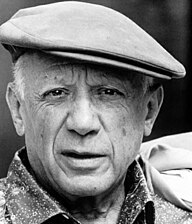
Pablo Picasso is one of the most famous artists of all time, and he's definitely the best-known cubist.  He was born in Málaga, a city in Andalucía, in 1881, though he spent much of his life in France (like Dalí, he makes an appearance in one of my favorite movies, Midnight in Paris).

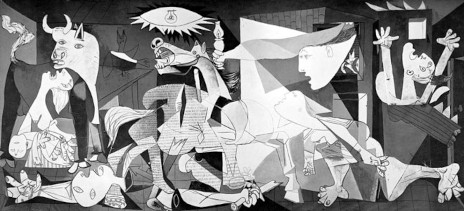
His most famous work is probably Guernica, inspired by the 1937 bombing of the town of Guernica during the Spanish Civil War.  The bombs, however, were from German planes.  Hitler, a supporter of Franco, had received permission to test new weapons in the area--Basque country, a Republican stronghold in the North.

This painting was Picasso's response:


What do you think?  Does it capture the chaos of a bombing, the emotions, or does the cubism distance the viewer?

Now for writing:  Do you know of any works that were a response to a highly specific event, such as Guernica?

Wednesday, April 17, 2013

A - Z Challenge: OLIVES

SPAIN

Again, I don't have a lot to post today.  Not only are these letters difficult, but I've been in Ireland since Friday, so I hurriedly wrote all these posts in advance.  I could give up, but no!  I've come this far, so I refuse to lose the challenge!  Muahaha!

So.  Olives.  Spain is a huge producer of olives.  If you drive through the countryside, you'll see rows and rows of olive trees.  So it's no surprise that olive oil is essential to the Spanish kitchen.  At restaurants, they're often served alongside the bread brought before the meal.

And that's all I have to say about them.  I like olives, but they're only so interesting :)

Monday, April 15, 2013

A - Z Challenge: MISSING HOME

SPAIN

As much as I love Spain, there's a lot I miss about my home(s) in Philadelphia and Williamsburg.  Obviously, I miss my family, friends, and pets, but here are some more specific things that, if you come to Spain, you'll find lacking.

Peanut Butter

Not a thing here.  Spaniards don't eat it.  Heck, Europeans in general don't eat it.  Peanut butter is  strictly American, which I didn't know until I got here.  Sure, you can find it in the supermarkets, but it's ridiculously expensive.  Plus, it's not nearly as good as Jif.

However, they do have an abundance of Nutella, of which I highly approve.  Good job, Europe.

Coffee Shops

Coming to Spain, I thought I would find an abundance of amazing coffee shops.  It's Europe, right?  I figured I'd be at a café every day, sipping excellent coffee while I wrote.

How wrong I was.

Yes, Europe has cafés, but they're not "sit and relax" cafés.  It's frowned upon to do any type of work, so no reading, no writing, no opening up your laptop.  Cafés are for eating, drinking, and socializing, so if you go alone to do work, you're given quite a lot of weird looks.

You know it's bad when my favorite café is Starbucks.  The only place with comfortable seating and free unlimited wifi.  Plus, it's acceptable to do work there (probably because it's 95% foreigners).  At any rate, I miss good ol' American coffee shops, and once I get back to Williamsburg, the managers  will have to literally drag me out of Aromas come closing time, because I won't ever want to leave.

Netflix

It stops working once you leave the States.  No streaming.  Nothing.  Same goes for Hulu.

Food (other than peanut butter, which obviously deserves its own category)

Steak.  Chinese take-out.  Corn on the cob.  Reese's Cups.  Soy milk.  Steak.  French vanilla coffee creamer.  Chips and salsa.  Pita Pit.  Steak.  Raw vegetables.  Dark chocolate M &Ms.  Did I say steak?

Saturday, April 13, 2013

A - Z Challenge: LEFTOVERS (ROME & MOORS)

SPAIN

The Iberian Peninsula has been inhabited for centuries, most notably by the Roman and Ottoman Empires.  To this day, you can see many leftovers in Spanish cities, especially in the autonomous community of Andalusia, the name of which comes from the Arabic Al-Andalus.

Architecture

This Roman aqueduct is right by my house!
Moors maintained a presence on the Iberian Peninsula from 711 to 1492.  That's 781 years.  Comparably, Spain has only been "Spanish" as we know it for 521 years, which is very strange to think about.  It's been asked if the Reconquista, or the Reconquest (when Catholics led by Ferdinand and Isabel expelled the Arabs from Spain), was actually a reconquest, or if it was just a conquest.

I believe these columns were supposedly
placed here by Hercules himself.  (Hercules
founded many cities in Spain, including
Sevilla and Barcelona, according to legend.)
Traveling through Spain, you'll find a lot of architectural leftovers from Rome and Moorish occupation.  In Sevilla, for example, there are several Roman columns.  My street even has the ruins of an old aqueduct :)

A patio in the Alcázar.  These archways are a
signature element of Islamic architecture.
As for Moorish influence, it's everywhere.  Courtyards, rounded archways, and tiles all have their origins in Arabic architecture.

The Alcázar, for example, was originally a Moorish fort, converted into a royal palace.  Though there are certain Gothic elements, most of it is Islamic design.

Sevilla's most famous site, the Cathedral, was actually originally a mosque.  The Giralda served as a minaret from which someone would issue the call to prayer.  It was converted into a Cathedral, yet it still has lots of Islamic architecture.


The Cathedral in Sevilla.


Language

While Spanish is a romance language that has Latin roots, its filled with words that come from Arabic.  Some of these include:

Andalucía - from Al-Andalus, the Arabic name for the region.
Ojalá - I hope, from law šhaʾ allāh "God willing".
Alcázar - palace, from al-qasr
Zumo - juice, from zum.  Spain is the only Spanish-speaking country that uses "zumo" for juice.

And hundreds more!

WRITING

When writers build worlds, they often draw from real cultures and civilizations.  Stereotypical fantasy worlds are usually based on medieval Northern Europe (the Holy Roman Empire is probably closest in comparison); and when they name characters and places, they often pick a language to act as the "root language."

Why is this a good idea?  So that the made-up words sound as though they belong to the same family, the same culture.  It helps to make the world believable, and that's extremely important :)  So as you create world, make like Spain and let other civilizations influence you!

P.S.  I'd love to read a fantasy in which the world is based on North Africa or Middle East, so if you know of any, please let me know!

Friday, April 12, 2013

A - Z Challenge: KISSING

SPAIN

Pucker up!  In Spain, as in many Hispanic countries, kisses are big.  That is, dos besos--or two kisses, one on each cheek--is Spain's form of a greeting.  While handshakes exist, they're exclusively between men, and even then they aren't that common.

Whenever you greet someone in Spain, whether you're best friends or you've never seen them before in your life, most likely you'll exchange besos.  You'll say something like, "Hola, me llamo Sam.  Mucho gusto" ("Hello, my name is Sam.  Nice to meet you"), then he'll introduce himself, and proceed to give you dos besos.  Sometimes the besos come even before the name.  However, most of the time lips don't actually touch skin; rather, it's cheek to cheek, like this:


Besos are something that, if you come to Spain, you must do.  Otherwise, you'll end up confusing a lot of people.  Plus, you'll likely insult them, and you don't want that.  So don't be shy!

WRITING

Who doesn't love a good kissing scene, right?  They're fun to read.  They're fun to write.  However, it's easy to go overboard:  a first kiss doesn't need to be a page long.  One sentence, maybe two, will suffice.  Much longer than that, and I start to roll my eyes, unless there's a specific reason it's being dragged out.

Kisses, especially in YA, are one of the weapons writers hold in their arsenals.  Even if the book isn't strictly romance, the question of "When will the characters admit their love and share a kiss?" keeps readers turning pages.  In the hopes that the next scene, the next chapter, will hold that long-awaited kiss.  That's why I'm so opposed to insta-love.  If the romance happens right away, the story can quickly lose a lot of momentum.

That's why Ron and Hermione's kiss is one of the best literary kisses of all time.  Because we had to wait.  And not just for a few chapters, but for seven.  whole.  books.  So when it finally happened, I was beside myself with joy, jumping up and down, shouting "Finally!" at the top of my lungs.
What do you think about kissing scenes?  What are your favorites?  Least favorites?

Thursday, April 11, 2013

A - Z Challenge: JUAN TENORIO (DON JUAN)

SPAIN

Most likely you've heard of the infamous Don Juan, but have you ever paused to ask yourself, "What, exactly, is his deal?"

I know I didn't.  Not until I came to Spain, anyway.  I knew that Don Juan was a notorious lover, but that's it.

There are various versions of the tale.  In general, however, it goes something like this:

Don Juan supposedly lived in Sevilla, specifically in Barrio Santa Cruz, where today there are plaques denoting his house and the house of one of his lovers, Doña Inés.  He was wealthy, handsome, prone to gambling and violence, and extremely proud of his prowess.

The plaque in Barrio Santa Cruz.  It reads something like:  "Popular rumor says that in this part of the old neighorhood, on Chorro Street, there was born a gentleman whom nobody could surpass in games, in fighting, or in love.  He died and was redeemed in Seville by Doña Inés, and the pen of Don José Zorrilla, in his retelling of the legend, gave him life in the universal work of DON JUAN TENORIO."
After seducing Don Inés, her father Don Gonzalo challenged him to a duel.  Don Juan, always the better fighter, won, but had to flee the city.  Shortly thereafter, Doña Inés died of sorrow.

Then Don Juan sees a vision of his own death.  His own burial.  Plot twist!  Don Juan was actually killed in the duel with Don Gonzalo, and here is where versions split:  sometimes, Doña Inés redeems him and together they go to Heaven.  In others, he is swept into Hell as punishment for his philandering, violence, and vanity.

WRITING

The Don Juan legend is one that gets a lot of retelling, at least in Spanish literature.  What with shows like Once Upon a Time, books like Cinder, and movies like Jack the Giant Slayer, retellings are big these days.  I really like retellings, especially when they involve more obscure legends, though my all-time favorite is Ever After.  Not exactly obscure, but how can you go wrong when the fairy godmother figure is Leonardo da Vinci?  Right now, I'm reading This Dark Endeavor and Such Wicked Intent, both retellings/prequels of/to Frankenstein, written by one of my favorite authors, Kenneth Oppel.  If you like retellings, I definitely recommend them.

What's your opinion on the retelling trend?  What are you favorites?  What would you like to see?

Wednesday, April 10, 2013

A - Z Challenge: INQUISITION

SPAIN

All right, I'm going to cheat on this post.  But I've already written (a lot) about the Spanish Inquisition, so if you're interested, go here:

Tuesday, April 9, 2013

A - Z Challenge: HOMES

SPAIN

Our living room/dining room.
One of the biggest differences between the U.S. and Spain is the concept of the home.  In the States, it seems that most of the middle to upper class lives in a house located in the suburbs of some large city or another.

Not so in Spain.

Here the vast majority of people live in a piso, a small apartment with a tiny kitchen, living room/dining room, bathroom, and maybe three bedrooms, each smaller than the average college dorm room.  Not spacious at all, but it's all that's needed.  The home is a family space, meant primarily for sleeping and eating, so friends don't often come over to hang out.  No slumber parties, no movie marathons.  The majority of social activities occur en la calle, or "on the street."

Our kitchen.  Since food is bought for the day, and that's it,
there's no need for a pantry.
That's why cities and towns are filled with plazas, which serve as outdoor living rooms.  That's where friends can meet up and hang out, and why public drinking isn't quite as frowned upon as it is in the States.  (I believe it's still illegal, but the Guardia Civil pretends it isn't.)

WRITING

Have you ever read a book in which the building(s) were extremely memorable?  Hopefully, since the Hogwarts castle is amazing with its moving staircases and talking portraits. Another one that comes to mind is I Capture the Castle by Dodie Smith, in which the castle is a constant presence.  The narrator, Cassandra, is always telling the readers about the gatehouse, and the moat, and the towers, and the dungeon.

I always like when I feel a special attachment to a place I've never actually been.  Like Hogwarts.  The last book pained me for many reasons, but it was torturous to read how my beloved Hogwarts, which felt like home to me, was crumbling under an onslaught of Death Eaters.  And how about Tara, from Gone with the Wind?

Setting is big for me, which is why I like to emphasize specific places, especially in short stories.  Places of historical importance.  Places from my childhood.  Places I'd love to visit.

What about you?  What are you favorite fictional places?

Monday, April 8, 2013

A - Z Challenge: GASTRONOMY

A lunch my host mom serves regularly.  Mostly peas
and chorizo.
SPAIN

Ah, the obligatory post on gastronomy, or in less fancy words, food.

The Spanish diet is, without a doubt, the single most interesting diet I've come across.  Not only for the type of food, but for food's place in culture and daily life.

Breakfast:  7:00 AM

Breakfast isn't a big deal in Spain.  Usually it consists of tostadas, the Spanish phrase for toast, with butter or jam, and café con leche (coffee with milk).  It's eaten whenever you get up in the morning, which for me, is usually around 7:00 AM.  Since lunch isn't served 'til 2:00 in the afternoon, I tend to break away from cultural norms and put peanut butter on my toast for some added protein.

(Peanut butter is not common in Spain.  Spaniards don't eat it, and though you can find it in the grocery store, it's very expensive.)

Lunch:  2:00 - 3:00 PM
A few weeks ago I attended a cooking class.
Here, our chef Carlos helps me make a
chicken and vegetable paella.

Lunch in Spain is not a mere sandwich or salad, as it is in the U.S.  Nope, lunch is the largest meal of the day, and that's large.  Every day, my host mother brings out huge portions of the main course, bread, cheese, salad, and fruit.  This is why the siesta is such an important aspect of Spanish culture:  people come home from work for lunch, so everything shuts down (most businesses are closed from 2:00 - 5:00), and afterwards, people relax, often taking a nap.

So what does the main meal consist of?

Spain's signature dish is paella, which consists of rice, chicken, chorizo, seafood, and vegetables (though you usually won't get meat and seafood mixed).  Paella, however, isn't an everyday food, unlike bread and chickpeas.  Being quite an ordeal to prepare, it's usually made on special occasions, oftentimes as a family activity.

It was my job to cut the squid!  To my
surprise, we used the entire squid.  Head,
tentacles, everything except the cartilage.
Most dishes I've had are stew-like:  white beans, chickpeas, or peas with bits of chicken and chorizo.  Spain, being located on the Iberian peninsula, also consumes a lot of seafood:  tuna, salmon, shrimp, and especially squid (often in an ink-based sauce).

If you have to eat on the run, you'll probably pack or buy a bocadillo:  a baguette-type bread with either chorizo, cheese, chicken, tuna, or tortilla española.


Our final products!  Paella!

Dinner:  9:00 - 11:00 PM

Dinner is small in Spain.  For us students, it usually involves tortilla española, which is usually made with eggs, potatoes, and sometimes vegetables.  It's very similar to quiche.  We eat it every day, sometimes with pumpkin soup, pasta with tuna, or a plate of vegetables.

Dessert

Usually dessert involves fruit:  bananas, oranges, apples, kiwi, strawberries.  I like fruit, but not as much as I like chocolate, so I had to do some good snooping in the supermarkets.  Here's what I found:

Principe cookies are like reverse Oreos, except they put Oreos to shame.  You can't get them outside of Europe, so I'm going to need a whole suitcase just for my supply of Principe Cookies.

Milka is one of the big "non-fancy" chocolate brands over here, equivalent to Hershey in the States.  The regular one is good, but you haven't lived until you've tried Milka with Oreo.  It's like a chocolate covered Oreo…but better.

Tapas

This is in Turkey, not Spain, but you can see the spit.
If you tend to get hungry between lunch and dinner or after dinner, Spain is your kind of place.  The streets are lined with tapas restaurants, where you can pay two or three euro and get small plates called tapas.  Morcilla, fried brie, croquetas, and more!  They're kind of like appetizers.

Random

Döner Kebab - You know how the U.S. has quick Chinese food on every corner?  Well, Spain has Turkish fast food in the form of döner kebab, a pita filled with chicken or lamb that's roasted on a spit.  My friends and I frequently make late night döner runs.

Helado - The ice cream in Spain is the best ice cream I've ever had in my life, plus it comes in all kinds of neat flavors, including Kinder and dulce de leche.

Churros con chocolate - Fried dough dipped in thick hot chocolate.  It's rough on the stomach, but it's worth trying at least once.