Showing posts with label Literature. Show all posts

Friday, October 25, 2013

"Writers betray people."

Last week, I had the honor of meeting Justin Torres, the bestselling author of WE THE ANIMALS.  If you haven't read it, you're missing out.  In short, it's a haunting coming-of-age story about family, betrayal, and sexuality that packs one hell of a punch in a whopping 125 pages.

The book.
The signed book.  It's OK to be jealous.

Though WE THE ANIMALS is fiction, Torres admits that it's thematically autobiographical.  Hence, one of the most interesting conversations we had involved his family's reaction to the book.  He said it was tough.  When the book was first coming out, he spent a lot of time worried about what they'd think when they recognized themselves in the characters.

"Writers betray people," he said.

As someone who frequently writes from personal experience, that comment really stuck with me.  He went on to say that he doesn't know if it's right.  If it's worth it.

At any rate, it got me thinking.

P.S.  Justin Torres disapproves of the blogosphere.  Oh well :)

(left to right) Me with phenomenal writers Tom Chester, Noa Nir, Meagan Smith, and Justin Torres

Thursday, May 16, 2013

What is Magical Realism?

When I tell people I came to Spain to study literature (among other reasons, but that's the academic reason), they look at me funny, as though my freckles have turned purple.  Not many English majors venture to Spain; most American students go to the U.K. to study literature, which makes a lot of sense.  But the U.K. is a little chilly for my tastes, so here I am.  Plus, I really like Spanish and Latin American literature, probably even more than I like Brit Lit.

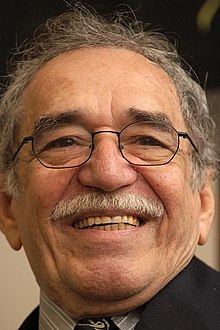
Márquez, considered the master of
magical realism.
For decades, Latin American literature has been linked with magical realism, though technically, the genre hails from France.  But as my professor told us, "Americans do it better."

Gabriel García Márquez.  'Nuff said.

But what is magical realism?  For some reason, it's a genre that we have a lot of trouble defining.  Often I'll look at a book that's described as magical realism, but really it's urban fantasy (or even just fantasy). Recently my professor gave us a good definition, which I figured I'd share:

Magical realism is exactly what the name suggests:  magical events happen in the normal world, but what separates it from genres like urban fantasy is that the events are told as though they're completely ordinary.  There is no sense of awe.  No wonder.  The characters show little to no reaction, and if they do, it's something like, "Hmm, that's interesting," and then they continue on with their lives.  They don't dwell on it, and neither does the narrator.  Magic is almost an aside:  "By the way, he was levitating.  No biggie."

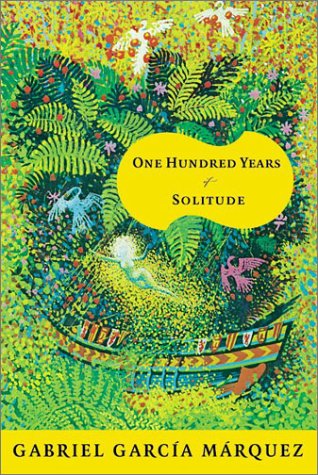
In One Hundred Years of Solitude, for example, a character starts to levitate.  Why?  Because he drank hot chocolate.  It's passed off as totally normal.  Nothing special.  Happens all the time.

So say a character discovers that her next door neighbor is a witch.  If she freaks out (because who ever heard of witches actually existing?) then most likely that's urban fantasy.  If it's mentioned in passing, such as, "As Natasha walked to school, she waved to her next door neighbor, Mrs. Andrews, who happened to be a witch," then most likely it's magical realism.

Saturday, April 6, 2013

A - Z Challenge: FLAMENCO

SPAIN

For me, the best part about flamenco is it's authenticity.  Unlike the bullfights, it's not a spectacle put on to attract tourists.  No, flamenco is deeply entrenched in Spain's culture.  That means that most everyone, especially in Andalucía, can sing or dance flamenco, at least to a certain extent.  It's not exclusive to the professionals.  If you're in Spain long enough, chances are you'll come across someone singing flamenco at the top of his lungs as he walks down the street.

Flamenco dancers in Sevilla, Spain
Walking through Sevilla, you'll find dozens of dress shops.  These dresses are pricey.  The cheapest you'll find is 75 euro (about $100), and that's the absolute cheapest.  For many girls, they get a new dress every year, which they adorn with flowers and ribbons, and will don during the week of Feria, a celebration based on flamenco, which happens to begin two weeks from now.  All night the people of Sevilla gather in casetas, personal tents set up on designated fairgrounds, where they dance flamenco 'til dawn.  Not to impress anyone, but just for fun.  For tradition.

Feria in Sevilla.  This is in two weeks.
WRITING

Many Spanish romantic writers, such as Gustavo Adolfo Bécquer, incorporated flamenco into their writing.  They referred to is as the poesía popular, or the popular poetry, and drew on its themes and rhythms to compose short stories and poems that reflected Spanish pop culture.  To them, flamenco was a source of endless inspiration:  it embodied passion, beauty, and pain in its potent vocals and intense movements.

Here's a video of some flamenco: